141
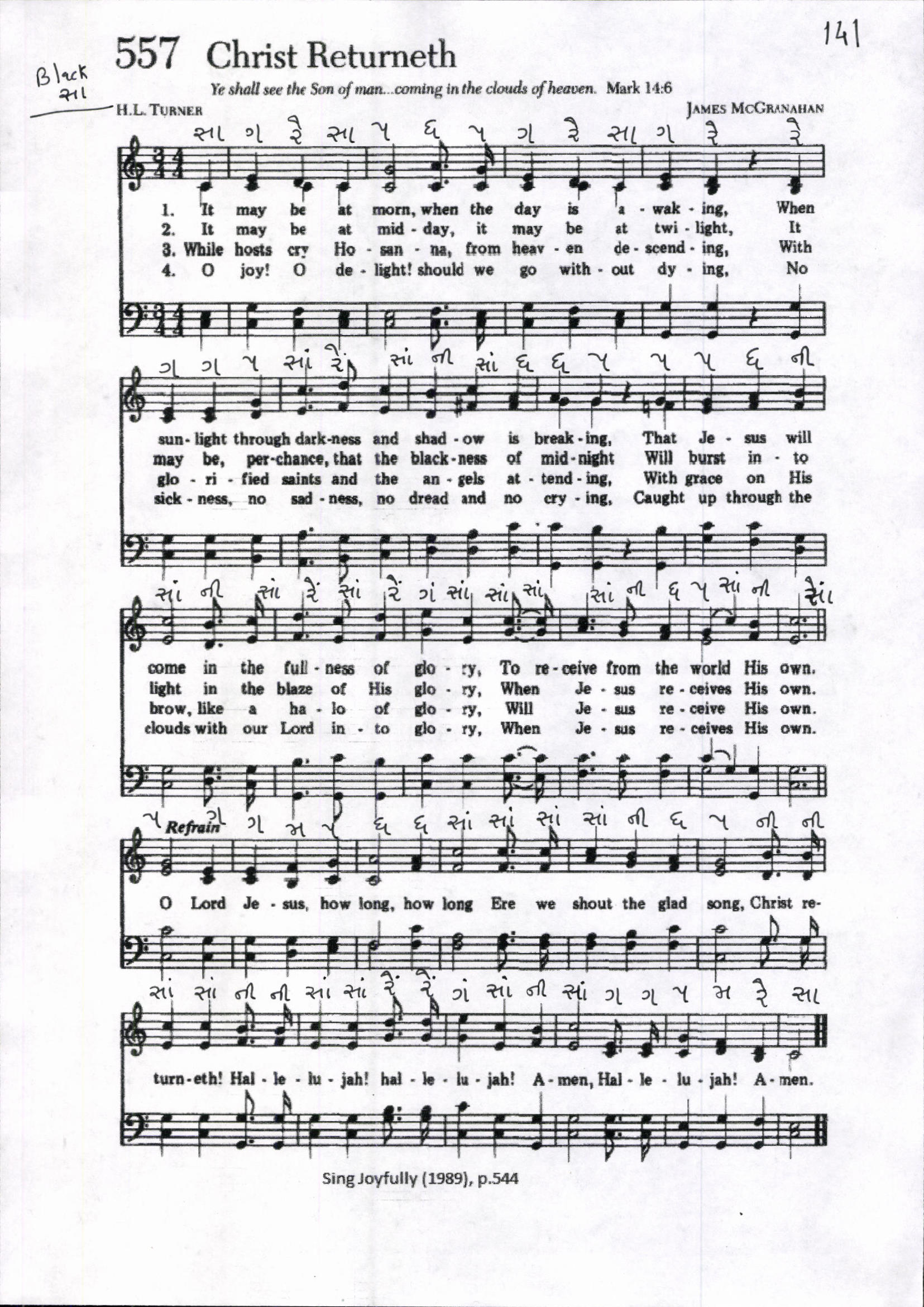
૧૪૧ - ખ્રિસ્તનું બીજી વારનું આવવું
| ૧૨, ૧૨, ૧૨, ૮ સ્વરો : ૬, ૮, ૬, ૬, ટેક | ||
| "It may be at morn when the day is awakening" | ||
| Tune: | S.S.163 | |
| કર્તા: | એચ. એલ. ટર્નર | |
| અનુ.: | રોબર્ટ વાઁર્ડ | |
| ટેક: | રે પ્રિય ઈસુ, શી વાર? શી વાર? ક્યારે થાય હર્ષ-પોકાર? - | |
| "ઈસુ, આવ્યા ! હાલેલૂયા! હાલેલૂયા! આમેન !" (૨) | ||
| ૧ | ઈસુ આવે ! કદાચ જ્યારે પ્રભાત ઊઘડે, | |
| સૂર્યના તેજમાં રાતનો અંધાર પીગળે, | ||
| ત્યારે તે આવે પૂરા ગૌરવને બળે, | ||
| જગમાંથી તેના લોક લેવા. | ||
| ૨ | તે આવે, કદાચ બપોર કે સંદ્યા ટાણે, | |
| કે મધરાત ચમકે જેમ તેજોમય દિન જાણે! | ||
| તેના ગૌરવના ચમકિત લાખોલાખ ભાણે, | ||
| જગમાંથી તેના લોક લેવા. | ||
| ૩ | મહિમાવંત સંતો ને દૂતોની સવારી ! | |
| હોસાના ગાતી ફોજોને અહીં ઉતારી ! | ||
| નિજ ભાલે કૃપા તેજવાન મુગટસમ ધારી, | ||
| જગમાંથી તેના લોક લેવા. | ||
| ૪ | રે સુખ ! રે ઉલ્લાસ ! મૃત્યુ વિણ જો ચડવાનાં | |
| વિણ રોગ ને રુદન, વિણ ડર આપણ જવાનાં, | ||
| મેઘમંડળ કેરી રાહે, થઈશું રવાના, | ||
| આવશે જ્યારે નિજ લોક લેવા. |
Phonetic English
| 12, 12, 12, 8 Swaro : 6, 8, 6, 6, Tek | ||
| "It may be at morn when the day is awakening" | ||
| Tune: | S.S.163 | |
| Kartaa: | H. L. Turnaraa | |
| Anu.: | Obert Ward | |
| Tek: | Re priya Isu, shi vaar? Shi vaar? Kyaare thaay harsh-pokaar? - | |
| "Isu, Aavyaa ! Hallelujah! Hallelujah! Amen !" (2) | ||
| 1 | Isu aave ! Kadaach jyaare prabhaat ughade, | |
| Suryanaa tejamaa raatno andhaar pigale, | ||
| Tyaare te aave puraa gauravane bale, | ||
| Jagamaathi Tenaa Lok Levaa. | ||
| 2 | Te aave, kadaach bapor ke sandhyaa taane, | |
| Ke madharaat chamake jem tejomay din jaane! | ||
| Tenaa gauravanaa chamakit laakholaakh bhaane, | ||
| Jagamaathi Tenaa Lok Levaa. | ||
| 3 | Mahimaavant santo ne dutoni savaari ! | |
| Hosaanaa gaati fojone anhi utaari ! | ||
| Nij bhaale krupaa tejavaan mugatasam dhaari, | ||
| Jagamaathi Tenaa Lok Levaa. | ||
| 4 | Re sukh ! Re ullaas ! Mrutyu vin jo chadavaanaa | |
| Vin rog ne rudan, vin dar aapan javaanaa, | ||
| Meghamandal keri raahe, thaishu ravaanaa, | ||
| Aavashe jyaare nij lok levaa. |
Translation
This translation was generated by AI and may contain errors. If something seems wrong, please check the original Gujarati text.
| 12, 12, 12, 8 Meter: 6, 8, 6, 6, Refrain | ||
| "It may be at morn when the day is awakening" | ||
| Tune: | S.S.163 | |
| Kartaa: | H. L. Turner | |
| અનુ.: | Robert Ward | |
| Refrain: | O dear Jesus, what time? what time? when shall the joyful cry arise? - | |
| "Jesus has come! Hallelujah! Hallelujah! Amen!" (2) | ||
| 1 | Jesus comes! perhaps when the dawn is breaking, | |
| In the sun's brightness the darkness of night is melting, | ||
| Then He comes blazing in full glory, | ||
| To take His people from the world. | ||
| 2 | He comes, perhaps at noon or at evening time, | |
| Or midnight shines as though it were a radiant day! | ||
| With the shining of His glory in hundreds of thousands of rays, | ||
| To take His people from the world. | ||
| 3 | A procession of glorious saints and angels! | |
| Bringing down here the hosts singing hosanna! | ||
| Upon His own brow wearing grace, radiant like a crown, | ||
| To take His people from the world. | ||
| 4 | O joy! O gladness! to rise without death | |
| Without sickness and weeping, without fear shall we go, | ||
| By the path of the clouds, we shall depart, | ||
| When He comes to take His own people. |
Image

Media - Hymn Tune : Christ Returneth - Sung By Mr.Nilesh Earnest